
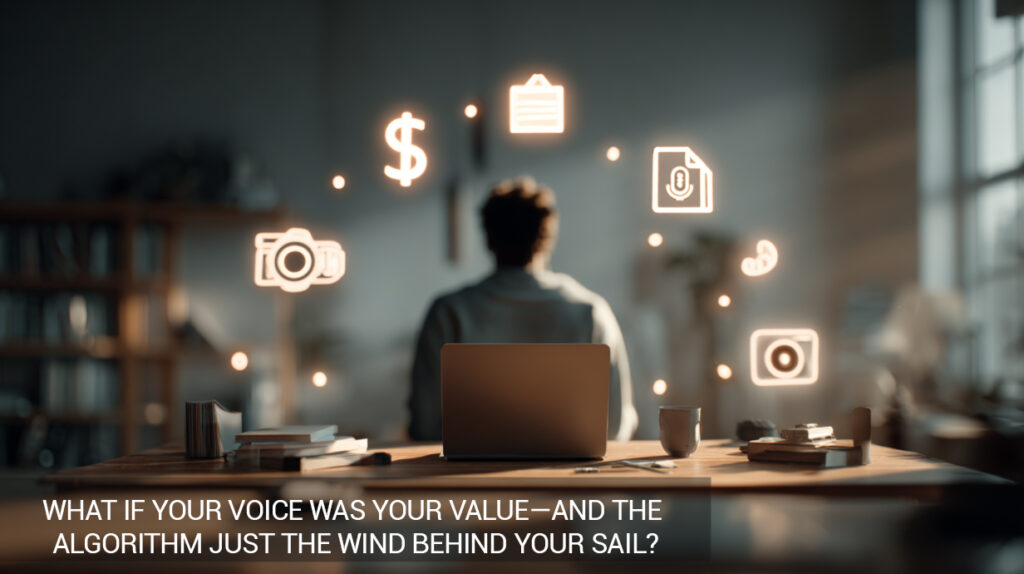
How the Creator Economy Quietly Became a Billion-Dollar Force
The Age of the Platform-Powered Individual
A teenager selling productivity templates on Notion. A retired teacher turning lesson plans into an income stream on Teachers Pay Teachers. A YouTuber with fewer than ten thousand followers earning more than a salaried software engineer.
None of these stories are rare anymore. What once seemed like outliers—people making money online through content—has quietly become a global shift.
The creator economy is no longer a niche for influencers or viral sensations. It’s a decentralized, digital labor market powered by everyday people building on platforms that allow them to own their work, connect with audiences, and monetize directly. According to a 2023 report by Goldman Sachs, the creator economy surpassed $250 billion globally—and is projected to double by 2027.
But numbers only tell part of the story. The deeper change is structural: a redistribution of economic power away from institutions and toward individuals. In the same way the printing press democratized access to knowledge, platforms like Substack, Patreon, and Gumroad are democratizing access to income.
Attention Is the New Leverage
Traditional careers were built on credentials, job titles, and institutional validation. The digital creator, by contrast, builds a career on attention—and more importantly, trust.
Kevin Kelly’s essay “1,000 True Fans,” published in 2008, was once considered optimistic. Today, it’s conservative. A creator with one thousand people who consistently buy their products or services—whether courses, eBooks, art, or consulting—can build a six-figure income without ever going viral.
This shift matters because it changes who gets to participate. You don’t need venture capital or a media job to create value. You need something far more personal: a specific voice, a useful perspective, or a clear skill set.
Monetization, then, becomes an extension of trust. When people pay a creator directly, they’re not buying content—they’re supporting a person. This is why creators with small but engaged audiences often earn more than those with massive but passive followings.
Platforms are responding. YouTube now allows monetization for channels with as few as five hundred subscribers. TikTok launched its Creator Rewards Program in 2023, emphasizing watch time and storytelling. Spotify opened up subscriptions for podcasters, while Twitter briefly experimented with “Super Follows.” The common thread? Micro-audiences can now become micro-businesses.
From Gig Work to Digital Ownership
Gig work exploded in the last decade, but it came with limits: no ownership, no scalability, no leverage. The creator economy, by contrast, rewards the opposite.
A ride-share driver earns only while driving. A course creator earns even while sleeping. The difference isn’t talent—it’s infrastructure.
Tools like Gumroad, Podia, and Teachable let anyone package knowledge into digital products. Substack and Ghost offer paid newsletters, letting writers bypass the ad economy entirely. Ko-fi and Buy Me a Coffee enable direct donations and membership perks.
But perhaps the most significant shift is toward programmable income—where creators don’t just sell, they automate. An artist can sell print-on-demand merch through Printful without touching inventory. A coder can sell reusable templates on GitHub Marketplace. A designer can earn royalties every time someone licenses their digital font.
These are not speculative models. They’re being used daily by creators who operate without staff, offices, or gatekeepers.
Tokenization and the New Frontier of Value
A quiet revolution is also happening through blockchain technologies—not in the headlines of overpriced NFTs, but in the infrastructure of ownership.
Tokenization allows creators to represent access, participation, or ownership as digital assets. A writer could release limited access to a private forum via NFTs. A podcaster could offer ad-free episodes as unlockable content tied to crypto wallets.
Mirror.xyz, a decentralized publishing platform, lets writers crowdfund essays through token-based patronage. Platforms like Sound.xyz allow musicians to tokenize songs and split royalties automatically among collaborators.
The principle behind all this is simple: creators shouldn’t just rent space on platforms. They should own a stake in what they build.
Web3 advocates call this “ownership economy,” but the idea goes deeper than technology. It’s about changing the question from How much can I charge per hour? to How can I structure what I create to earn across time?
It’s still early. Tools are clunky. Onboarding is complex. But the direction is clear: creators are moving from laborers to architects of their own economies.
Expertise Is Monetizable—Even Without Followers
One of the myths about the creator economy is that it’s only for the charismatic or highly visible. But many creators earn quietly, without an audience—because they monetize expertise, not influence.
Consider the rise of productized services: a web designer offering pre-made site themes; a copywriter selling email sequence templates; a strategist offering one-hour paid audits instead of long-term consulting. These aren’t influencers. They’re practitioners.
Marketplaces like Fiverr, Contra, and Toptal are shifting away from raw labor and toward packaged skills. Meanwhile, indie creators are building courses with platforms like Maven and Circle, hosting cohort-based learning around specific domains: Excel modeling, creative writing, personal finance, and more.
These aren’t side gigs. They’re scalable knowledge businesses, built without a traditional resume or a hiring manager.
The Mental Shift: Work as Reputation, Not Employment
What’s emerging isn’t just a new set of tools—it’s a new relationship with work. In the creator economy, your reputation is your resume. Your content is your portfolio. Your output is your proof of skill.
For many, this shift feels liberating. For others, it’s terrifying. There’s no guaranteed paycheck. No HR department. No illusion of stability.
But there is ownership. There is agency. And perhaps most importantly, there is longevity—because work that lives online can continue generating value long after it’s created.
This doesn’t mean everyone should quit their job to become a creator. But it does mean that understanding how to earn independently—by sharing what you know, documenting what you do, or teaching what you’ve mastered—is no longer optional. It’s a skillset as critical as writing a resume once was.
Final Thought: The Business of Being Yourself Is No Longer a Joke
A decade ago, the phrase “content creator” carried a whiff of unseriousness. Today, it’s a career. Tomorrow, it might be the norm.
What we’re seeing isn’t just a trend—it’s a redistribution of value. From platforms to people. From employers to individuals. From gatekeepers to communities.
The creator economy rewards consistency, not virality. Trust, not tricks. Depth, not breadth.
And in a world still wrestling with what work will look like in the age of automation, the most human job left may be the one only you can do—being yourself, at scale, with something worth sharing.